
Which zirconia should you prescribe? Monolithic vs layered, from a Perth dental lab
Share to AI
· Save this article into your assistant- Monolithic zirconia has no porcelain interface to chip - the default for molars and bruxers.
- Modern multi-layer blanks give monolithic units natural translucency without a cutback.
- Layered zirconia is best for anterior single units in the smile zone.
- The chipping risk on layered units is real if the design is over-reduced or occlusion is uncontrolled.
- Send tooth position, opposing dentition and a shade photo and we will recommend the material.
The monolithic versus layered decision comes down to where the crown sits and how much load it will carry.
For most posterior units we prescribe full-contour monolithic zirconia, and reserve layering for cases where anterior aesthetics justify the added chipping risk.
Monolithic vs layered at a glance
Both start from a zirconia core; the difference is whether porcelain is layered over it for depth.
This is how we weigh the two when a case comes in without a material specified.
| Monolithic zirconia | Layered zirconia | |
|---|---|---|
| Strength | Highest, no weak interface | Strong core, porcelain can chip |
| Aesthetics | Very good with multi-layer blanks | Best - depth and incisal character |
| Chip risk | Minimal | Real at the porcelain interface |
| Best for | Molars, bruxers, implant crowns | Anterior single units in the smile zone |
When monolithic zirconia is the safer call
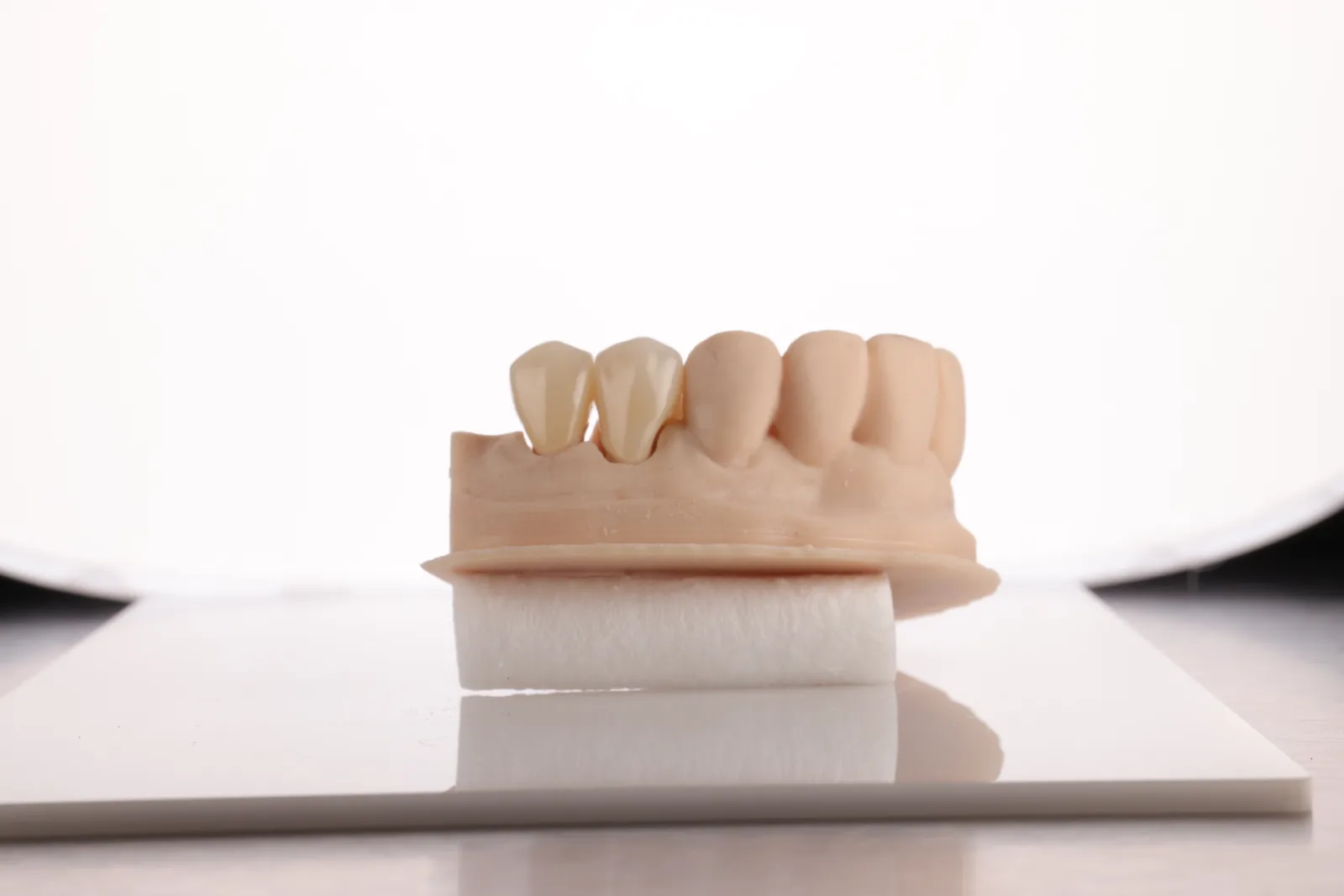
Monolithic zirconia is milled as a single full-contour unit with no veneering porcelain to chip.
That makes it the default for molars, bruxers and any patient with a heavy or parafunctional occlusion.
Modern multi-layer zirconia blanks now carry enough translucency gradient that a monolithic premolar can look natural without a cutback.
- Molars and second premolars under normal to heavy load
- Known or suspected bruxism and parafunction
- Limited occlusal clearance where a layered design would be under-supported
- Implant crowns where retrievability and durability matter most
When layering earns its place
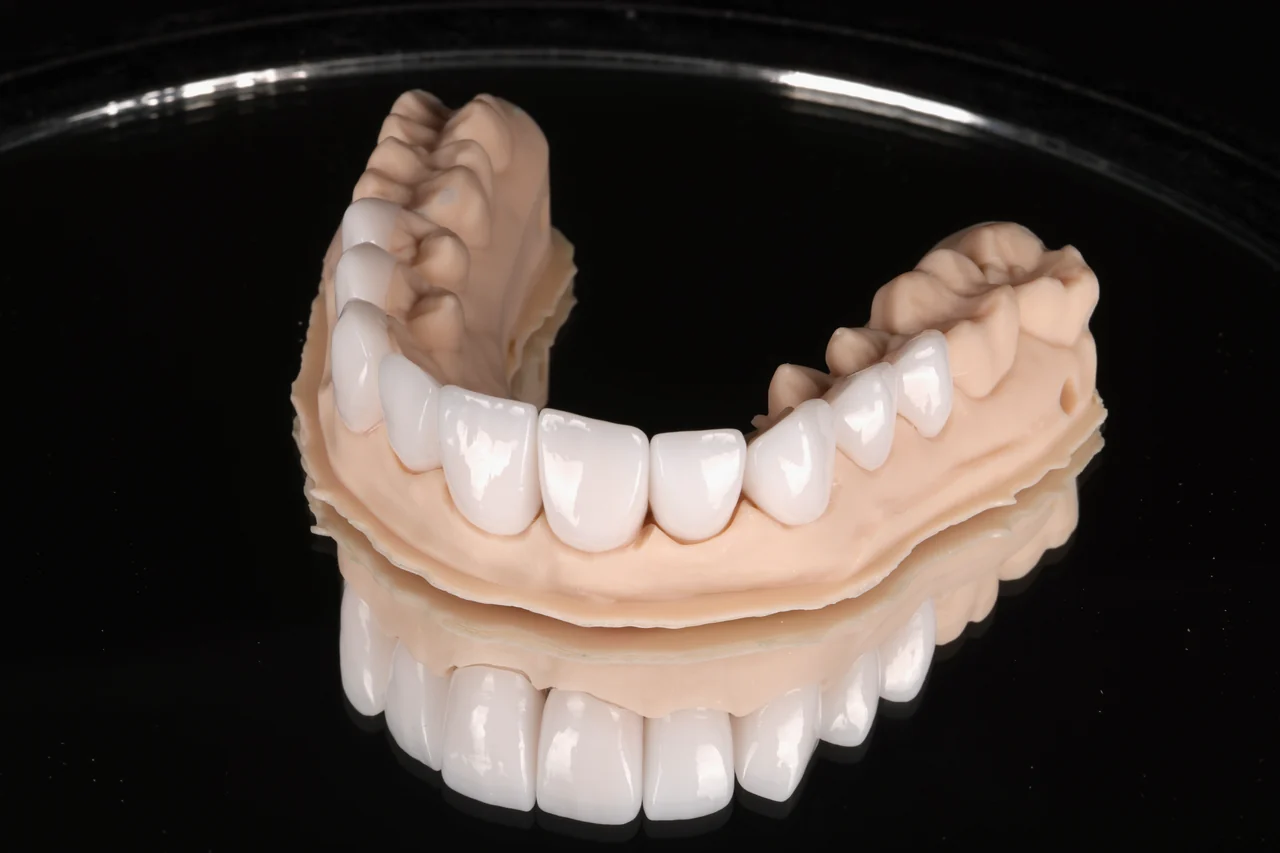
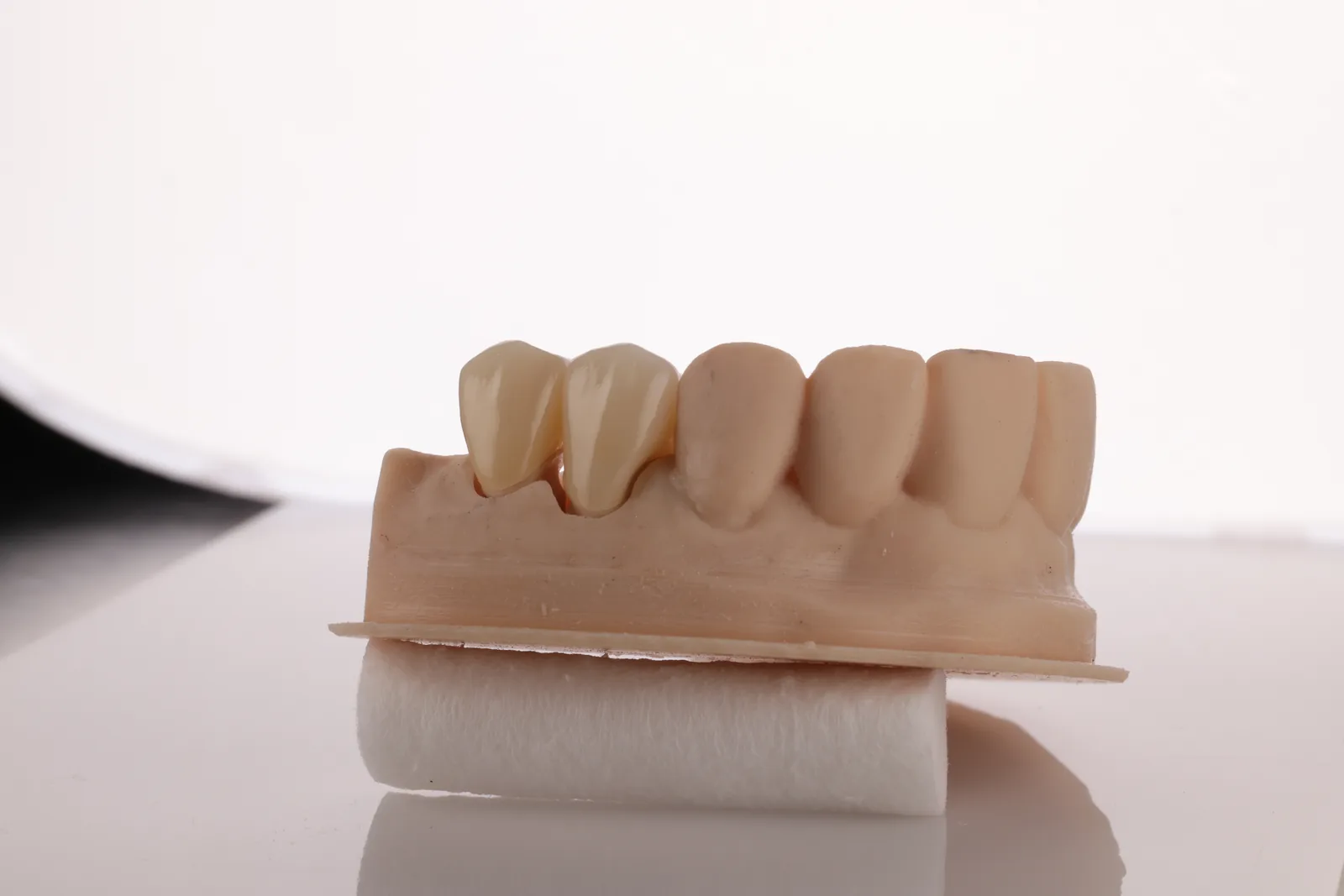
Layered zirconia adds hand-applied porcelain over a zirconia core for depth, incisal translucency and character.
It is the right choice in the aesthetic zone, especially anterior single units beside natural teeth.
The trade-off is a real chipping risk at the porcelain interface if the design is over-reduced or the occlusion is not controlled.
How to prescribe so we build the right thing
Tell us the tooth position, the opposing dentition and whether the patient is a known bruxer.
A shade photo with a neutral grey reference and a clear stump shade lets our ceramists match adjacent teeth accurately.
If you are unsure which to choose, send the case notes and we will recommend a material before we mill.
FAQs
Yes. Monolithic zirconia is milled as a single full-contour unit with no veneering porcelain, so there is no weak interface to chip. It is our default for molars, second premolars and any patient with heavy or parafunctional occlusion.
Modern multi-layer zirconia blanks carry a translucency and shade gradient, so a monolithic premolar can match adjacent teeth without a porcelain cutback. For anterior units where maximum character matters, we still recommend layering.
Layered zirconia is the better choice in the aesthetic zone, especially anterior single units beside natural teeth, where hand-applied porcelain adds depth and incisal translucency. The trade-off is a chipping risk at the porcelain interface if occlusion is not controlled.
Tell us the tooth position, the opposing dentition and whether the patient is a known bruxer, and send a shade photo with a neutral grey reference and stump shade. If you are unsure, send the case notes and we will recommend monolithic or layered before we mill.
Crowns and bridges run to a standard 10 business days. Express options are available on request for time-sensitive cases. Tell us your insert date up front and we will confirm whether it is achievable before you book the patient.