
How should a cosmetic dentist choose a Perth dental lab for full smile makeovers?
Share to AI
· Save this article into your assistant- You are choosing a ceramist, not a laboratory - ask for the name and the anterior portfolio.
- The approved wax-up should drive the reduction guide, the provisional and the definitive, unbroken.
- Agree the shade and photography protocol before prep day, not after the first shade fails.
- Book the try-in as a stage of the case, and agree who pays for it up front.
- Local matters for aesthetics: a shade appointment and a same-week correction are only possible nearby.
A single crown is judged on its own. It fits or it does not, the shade matches the tooth beside it or it does not, and if it is wrong you remake one unit.
A ten-unit makeover is judged as one object. Length, midline, incisal edge position, the way value falls back through the arch: any one of those can be individually acceptable and the smile still be wrong, and by the time you can see it the patient has been prepped.
That difference is why the lab you use for routine crown and bridge is not automatically the lab for a makeover, and it is why the questions worth asking are different ones.
You are choosing a ceramist, not a laboratory
Anterior aesthetics is not a process you can systematise the way you can a posterior monolithic crown. It is judgement, and judgement belongs to a person.
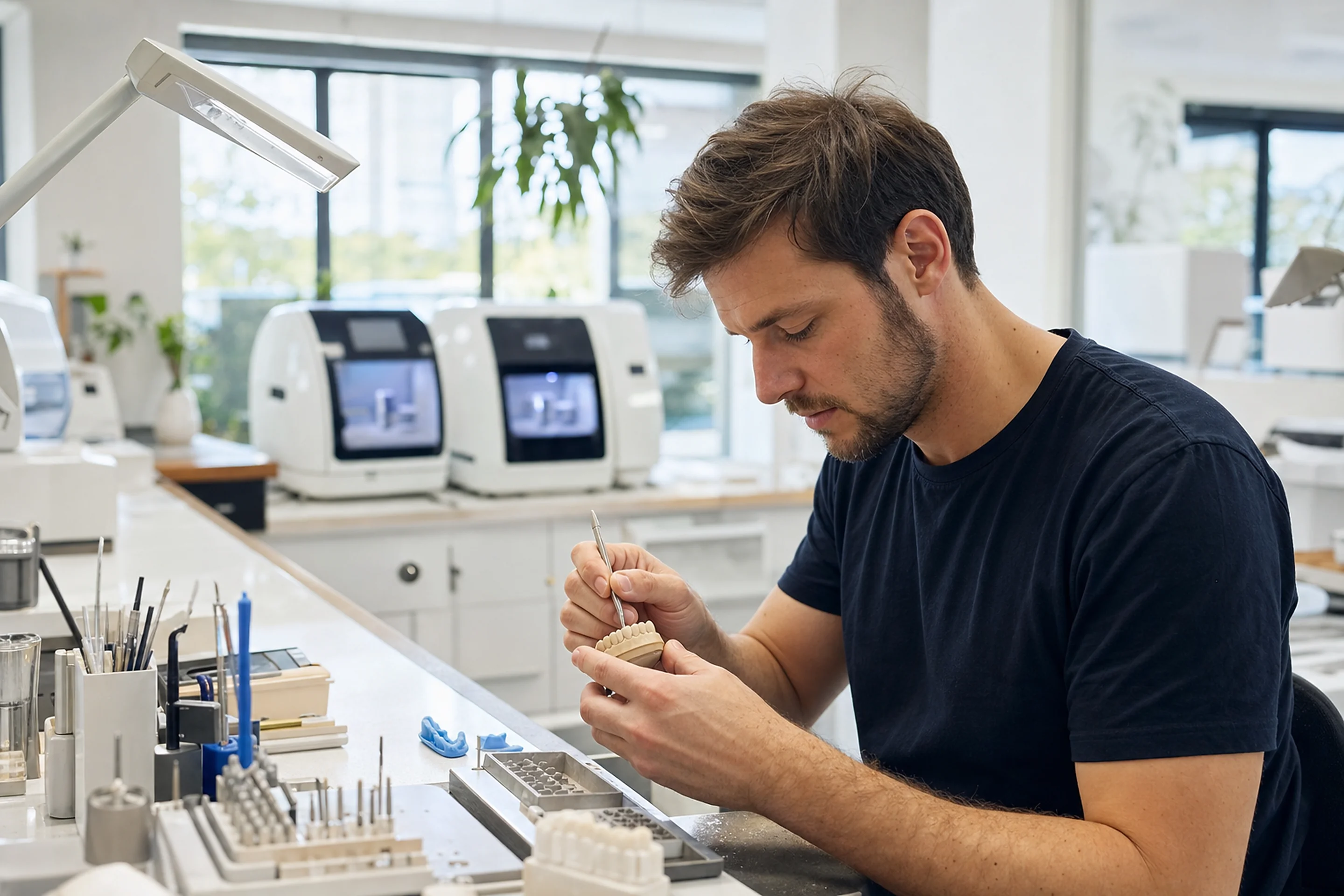
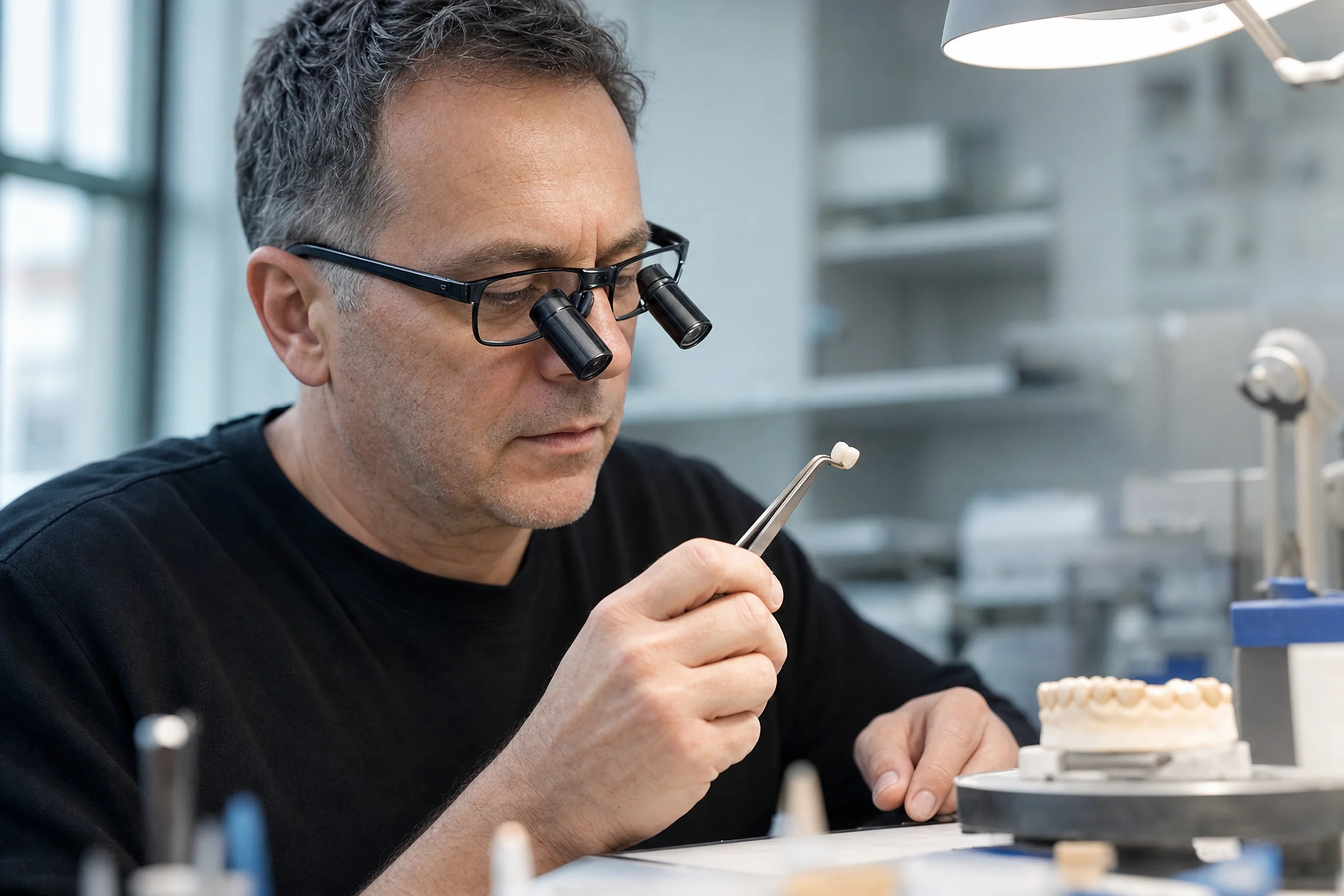
So the question is not what the lab can do, it is who will do it. Ask for the technician by name, ask to see anterior cases they finished themselves, and ask whether that person will hold the case from wax-up through to glaze or whether it will move between benches as it goes through the stages.
Then ask whether you can speak to them directly during the case. A makeover generates questions that a coordinator cannot answer, and the answer arriving two days later is the answer arriving after you needed it.
The wax-up has to drive everything downstream
On a makeover the diagnostic wax-up is not a preview, it is the design the whole case is built from.
What matters is whether the chain stays unbroken. The approved wax-up should produce the reduction guide you prep against, the matrix for the provisionals, and the shape the definitive units are built to. When any link is remade independently, the provisional the patient approved stops being the thing you deliver.
Ask the lab to walk you through that chain on a case they have finished. A lab that plans this way will describe it fluently. A lab that treats the wax-up as a sales tool will talk about the software instead.
- The wax-up is approved by the patient before a tooth is prepped
- The reduction guide comes from that approved wax-up, not a fresh design
- The provisional is made to the same shape, and is the patient's reference
- The definitive units are built to the approved provisional, adjustments included
Agree the shade protocol before prep day
Most shade failures on makeover cases are communication failures, and they are decided before the case reaches the lab.
Settle it in advance with the technician doing the work. What photographs they want, in what light, with the tabs in the same plane as the teeth. Whether they want a cross-polarised image to read value under the surface. Whether the patient should come to the lab for a custom shade, which is the single most reliable option and only practical if the lab is close enough.
Also agree what happens when the patient is bleaching. A shade taken mid-bleach is a shade that will not match in six weeks, and it is worth the delay to say so before the units are pressed.
Build the try-in into the plan, and price it before you need it
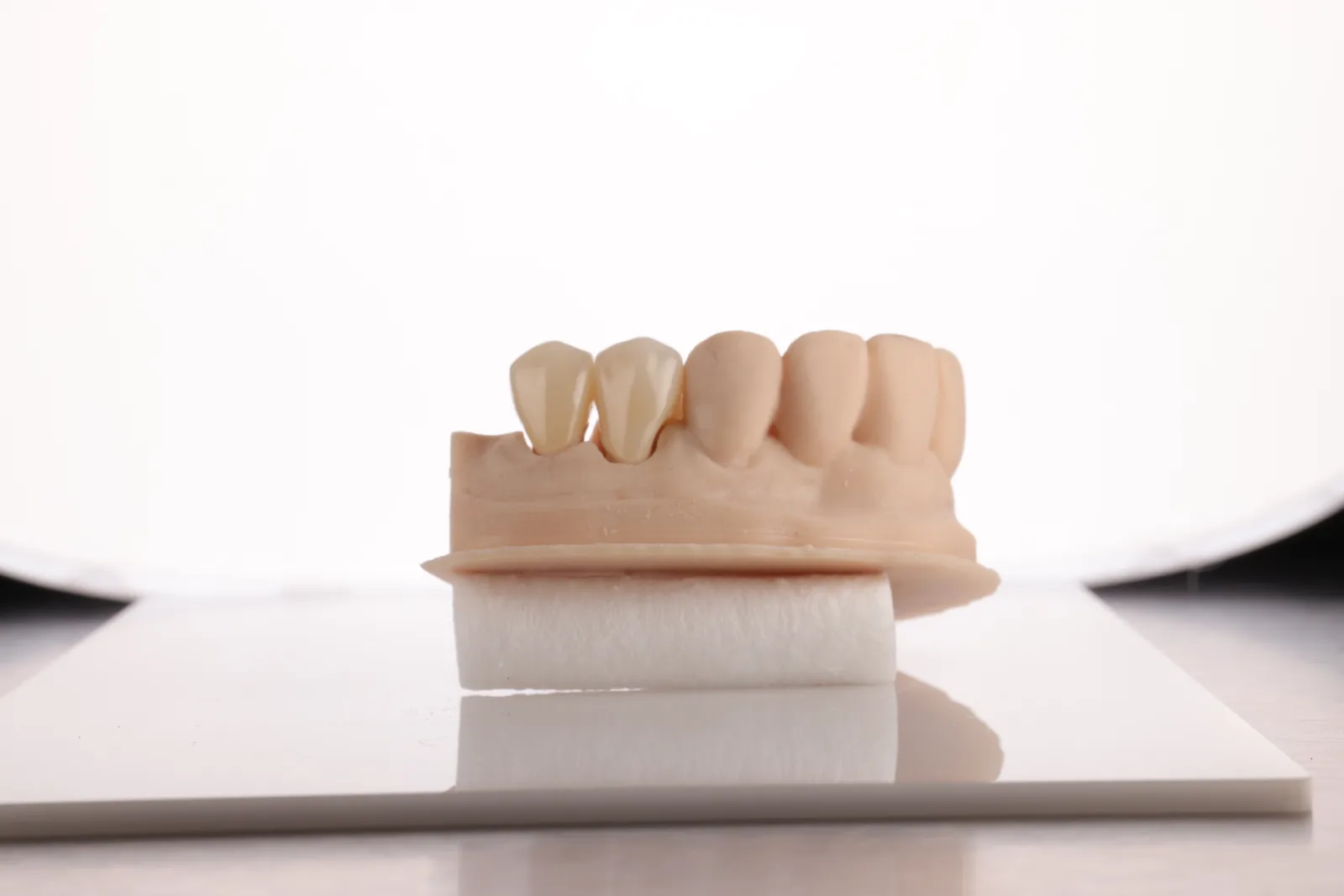
A bisque or unglazed try-in is the only point in a makeover where shape, length, midline and shade can still be changed at reasonable cost with the patient watching.
Skipping it does not save time, it moves the risk to the seat appointment, where the options are accept it, adjust it in the mouth or start again.
So ask two questions early: how many try-in stages the lab expects a case like this to need, and who pays for them. That conversation is straightforward now and difficult after the second one.
| Agree in advance | Why it costs you later |
|---|---|
| The named ceramist for the case | Judgement changes when the bench changes |
| Photograph set and lighting | A reshoot delays the case a week |
| Bleaching finished, or shade deferred | The match drifts after the case is seated |
| Number of try-ins and who pays | The argument lands mid-case |
| What the provisional is a reference for | The patient approves one smile, receives another |
Why Perth matters for this and not for a posterior crown
For a single molar crown, distance is a logistics question. For an anterior case it is a clinical one.
A local lab makes a custom shade appointment possible, so the ceramist reads the patient's teeth rather than a photograph of them. It makes a try-in adjustment turn around inside the same week rather than costing a fortnight and a second temporary. And when something needs a small correction after the seat, it is a short trip rather than a freight cycle.
None of that makes a distant lab incapable. It makes the feedback loop longer, and on a case where the patient is living in provisionals and looking in the mirror every morning, the length of that loop is what the experience is made of.
How we work on makeover cases at Prime Lab Dental Studios
Prime Lab Dental Studios is in West Leederville and was founded by a practising dentist and a technician with more than thirty years at the bench, which is the pairing these cases need.
Our digital wax-ups are shareable, so you and the patient approve the design before prep day, and the approved wax-up is produced as a reduction guide you can check prep depth against at the chair. In the aesthetic zone we layer E.max rather than defaulting to one system for the whole arch.
Crown and bridge runs to ten business days as standard with express options on request, and you can call and speak to the technician making your case rather than leaving a message about it.
FAQs
Choose the ceramist rather than the lab. Ask which named technician will handle the case from wax-up to glaze, ask to see their anterior work, confirm the lab keeps the wax-up, provisional and definitive in one chain, agree a shade and photography protocol before prep day, and build a try-in stage into the plan with the cost agreed in advance.
For a single posterior crown it does not. For an anterior case it changes what is possible: the patient can attend the lab for a custom shade under controlled light, a try-in can be adjusted and returned inside the same week, and a small correction does not cost you a fortnight and a second temporary.
Agree the set in advance with the technician who will do the work. Most ceramists want a retracted full-arch view, a close anterior view with the shade tabs in frame and in the same plane as the teeth, a cross-polarised image to read the underlying value, and at least one natural smile photograph so the case is judged the way the patient sees it.
On a multi-unit anterior case, yes. A bisque or unglazed try-in is the only point where shape, length, midline and shade can be changed cheaply while the patient is looking in a mirror. Agree beforehand how many try-in stages the case includes and who pays for them, because that conversation is far harder after the second one.
Plan it in stages rather than as one turnaround. The wax-up and its approval come first, the provisional phase follows, and the definitive units come last. As a guide our standard crown and bridge turnaround is ten business days, with express options on request, but a makeover is scheduled around the try-in dates rather than a single dispatch date.