
How to evaluate the quality of a dental lab in Australia
Share to AI
· Save this article into your assistant- A remake rate means nothing until you know what the lab counts as a remake.
- If a lab claims a quality standard, ask for the certificate number and the certifying body, then check it.
- Ask where each type of work is physically made, and get the answer in writing.
- A turnaround time is either a commitment or a target - make the lab say which.
- Three trial cases scored on named criteria tell you more than any sales visit.
Two labs can quote the same price, use the same brand of zirconia and deliver very different results in your chair.
Most guidance on choosing a lab gives you a list of questions to ask. That is a reasonable start, and it is not enough, because every lab has good answers ready for the obvious questions.
What separates a lab worth committing to is whether its answers survive being checked. Here is what to verify, and what a good answer actually looks like.
Start with the remake rate, and the definition behind it
A remake rate is the most honest single number a lab can give you, because it is the one that costs them money to report accurately.
The number on its own is close to meaningless, though. Ask what the lab counts. Some count only work a dentist sends back. Others include cases their own technicians rejected and remade before dispatch, which produces a higher figure and a far better lab.
So ask three things in order: what your remake rate is, what counts as a remake, and whether it is going up or down. A lab that tracks the number closely will answer all three without hesitating. A lab that answers by talking about its milling machine has told you what you needed to know.
Verify certification, do not just ask about it
Custom-made dental devices supplied in Australia are regulated by the Therapeutic Goods Administration, and any lab manufacturing them should be able to explain in plain terms how it meets those obligations.
ISO 13485 is the quality management standard written for medical device manufacturing, and many labs use it to demonstrate that they have documented material traceability, process control and complaint handling. Holding it is a decision a lab makes rather than a universal legal requirement, which is exactly why the certificate is worth sighting.
If a lab tells you it is certified, ask for the certificate number, the certifying body and the scope of the certificate, then check the number against that body's public register. It takes about two minutes. The scope matters as much as the certificate: a certificate that covers one part of the operation does not cover the rest of it.
Find out where the work is physically made
This is the question fewest dentists ask and the one with the widest range of answers.
Some Australian labs manufacture everything on site. Some outsource particular items, commonly full-arch frameworks, clear aligners or night guards, to a specialist here or overseas. Some operate largely as a finishing and dispatch point for work manufactured offshore.
None of those models is automatically wrong, and offshore manufacturing is not automatically poor. What is wrong is not knowing, because the answer changes your traceability, your turnaround when something needs remaking, and what you are able to tell a patient who asks.
- Ask per work type, not in general - the answer often differs by item
- Ask for it in writing, so it survives a change of account manager
- Ask what happens to the timeline when an outsourced case needs a remake
- Ask who holds the material records for work made somewhere else
Make the turnaround a commitment or an estimate
Every lab quotes a turnaround. Very few say whether it is a promise or a good day.
The distinction is the whole value of the number to you. If you book a seat appointment against a quoted ten days and the case lands on day fourteen, you have a temporary, a rescheduled patient and a conversation you should not have had to have.
Ask directly which it is, and ask what the lab does when a case is at risk. Proactive notification before the seat date is the answer you want. Finding out because you rang to chase it is not.
| Answer worth trusting | Answer worth worrying about |
|---|---|
| Gives a remake rate and defines it | Redirects to equipment and materials |
| Produces a certificate number and scope | Says certified without naming a standard |
| States where each work type is made | Vague about manufacturing location |
| Says whether turnaround is a commitment | Quotes a number and moves on |
| Names the technician on your account | Routes you to a general inbox |
| Welcomes a trial case and a visit | Reluctant to be seen up close |
Run a trial case properly
Everything above can be answered well by a lab that is not actually very good. The trial case is where you stop taking anyone's word for it.
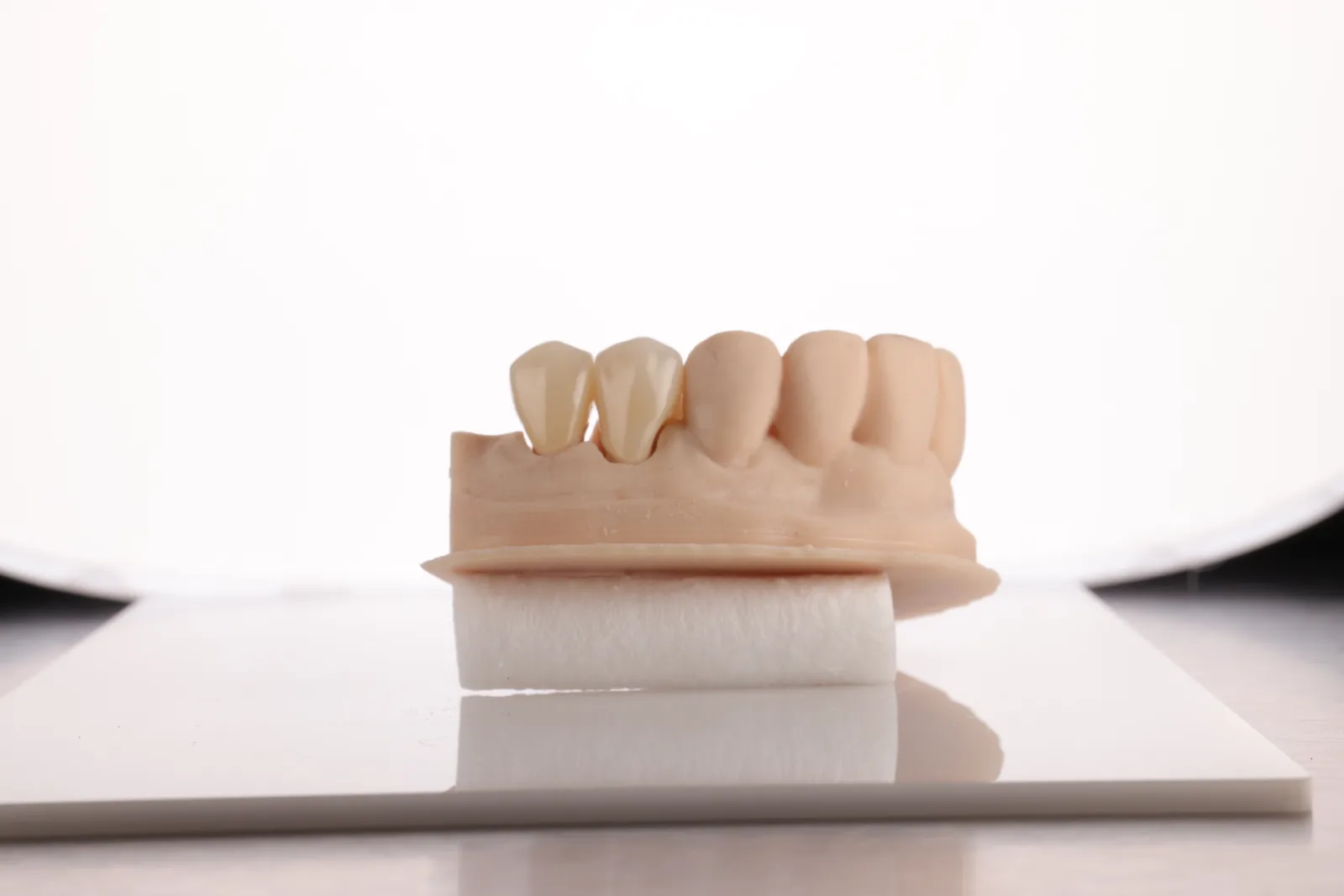
Send three cases rather than one, and choose them deliberately: a single posterior crown, an anterior unit where shade is the whole job, and something with a fit tolerance such as an implant restoration. One case tells you about one case.
- 1
Score fit before anything else
Marginal fit and contacts at try-in, adjusted or not. Record how much chair time each unit costs you, because that is the real price of a cheap lab.
- 2
Score the anterior on shade and character
Judge it in the patient's mouth under the light you actually work in, not on the bench. Ask whether the lab would have called you about the shade if it had doubts.
- 3
Score the communication, not just the crown
How quickly did a question get answered, and by whom. Whether you reached a technician or a coordinator is the difference you will feel on every difficult case afterwards.
- 4
Ask for the paperwork
Request the material record for one of the three. A lab with real traceability produces it the same day. A lab without it will offer you a brochure.
How we hold the standard at Prime Lab Dental Studios
Prime Lab Dental Studios was founded by a practising dentist and a technician with more than thirty years at the bench, because inconsistent lab work costs clinical time and patient trust.
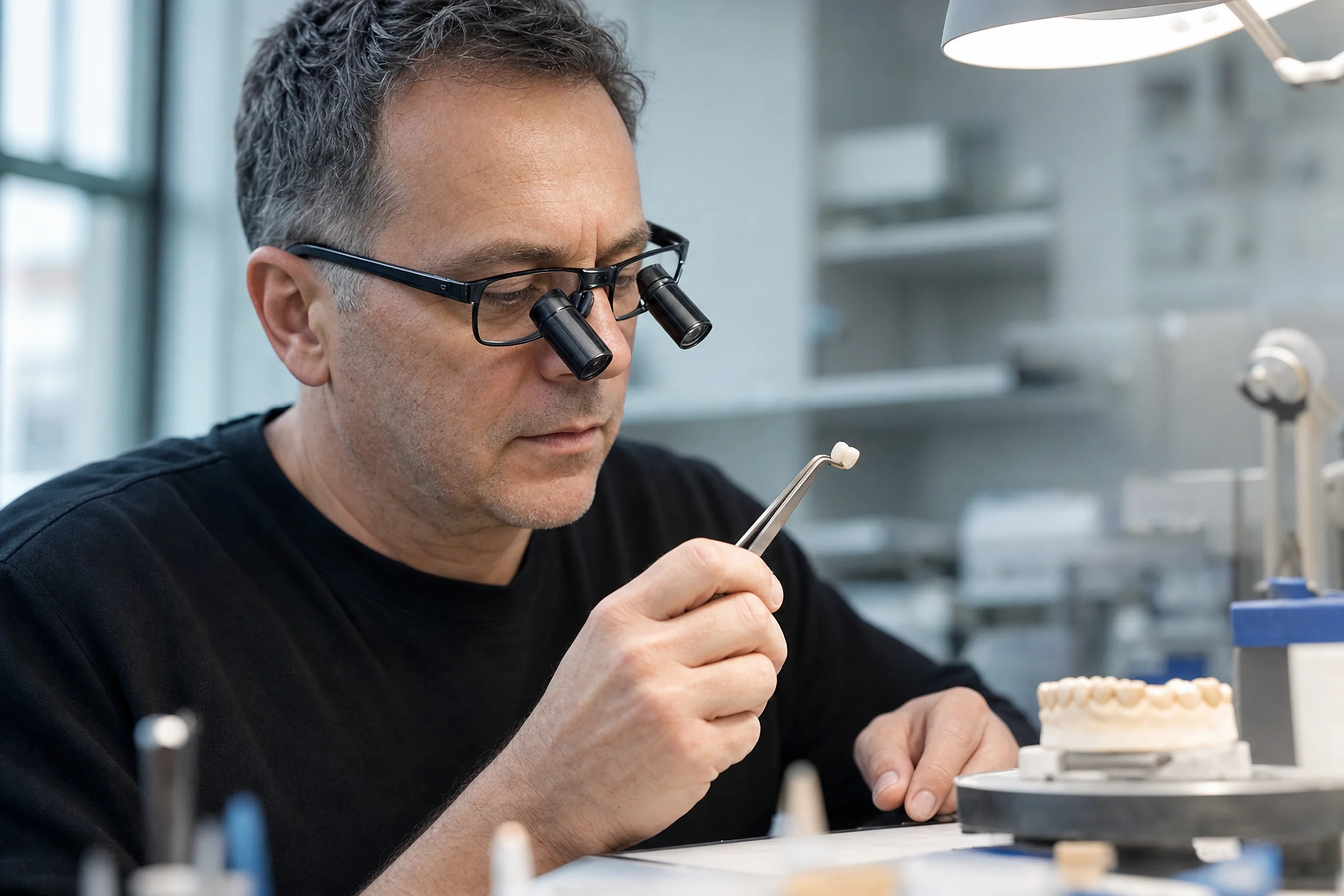
Every case is checked for margins, fit and occlusion under magnification before it leaves us, and you can call and speak to the person making your work rather than a coordinator relaying messages.
We would rather you tested all of that than took our word for it, which is the whole point of the section above.
FAQs
Verify four things rather than asking about them. Get the lab's remake rate and its definition of a remake, the certificate number and issuing body for any quality standard it claims, where each type of work is physically manufactured, and whether its turnaround is a commitment or an estimate. Then send a trial case and judge fit, margins and occlusion yourself.
Not automatically. Custom-made dental devices supplied in Australia are regulated by the TGA, and a lab must be able to explain how it meets those obligations. ISO 13485 is the medical-device quality management standard many labs use to demonstrate it, but holding it is a choice rather than a universal legal requirement, which is why the certificate itself is worth sighting.
Ask for the definition before the number. Some labs count only restorations remade after a dentist returns them; others include cases caught and remade internally before dispatch, which produces a higher and more honest figure. A lab that tracks remakes closely, defines them clearly and can tell you the trend is telling you more than one that quotes a low percentage.
Ask directly, per work type, and ask for the answer in writing. Some Australian labs manufacture everything on site, some outsource specific items such as full-arch frameworks or night guards, and some act largely as a finishing and dispatch point for work made overseas. None of those is automatically wrong, but you should know which one you are buying.
As an indicative guide, crowns and bridges run to a standard 10 business days, implant restorations 14 to 21 working days, and splints or retainers around 7. The number matters less than whether it is a commitment or a best case, and whether the lab tells you proactively when a case is at risk of running late.